
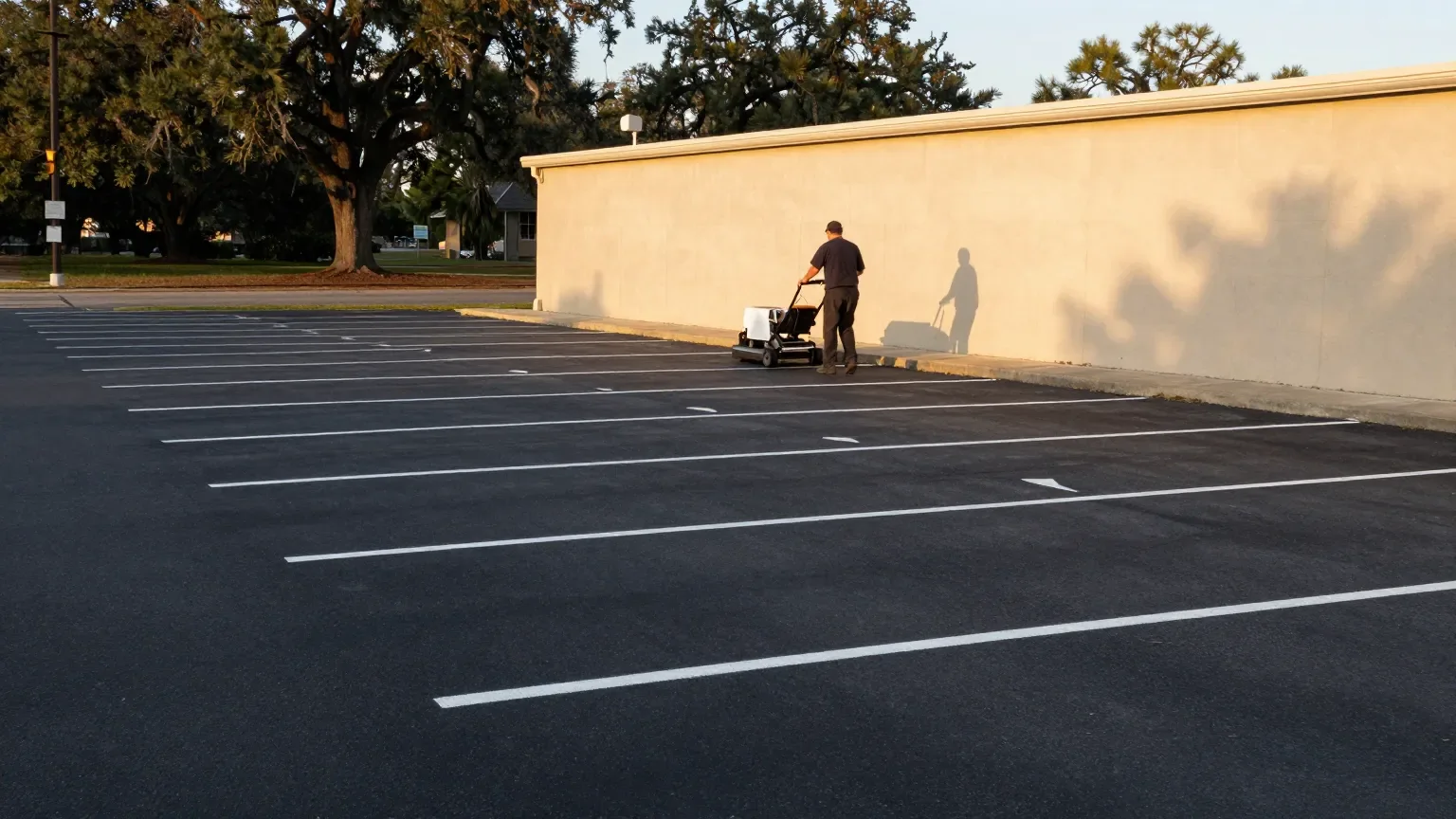
Restriping faded lots
Traffic paint wears away under tires and fades in strong sun, and in a busy lot the drive lanes and the stalls nearest the door go first. Restriping follows the existing layout: we clean the lines, then repaint stalls, arrows, crosswalks, stop bars and curb markings in the same places. It is the quickest way to make a lot look cared for again, and it keeps drivers parking where they should.
New layouts after paving or sealcoating
Fresh asphalt and a new sealcoat both cover the old lines, so the lot has to be laid out again. That is also the moment to fix a layout that never worked. We measure stall widths and drive aisles, plan the traffic flow in and out, and place accessible parking spaces, including van-accessible spaces, in the numbers and positions the federal accessibility standards call for based on the total number of spaces. The signs at those spaces are part of the requirement too, and we will point out where they are missing.
Call (225) 338-4482 Request a callback
Paint, timing and the weather
Striping needs dry pavement and a few dry hours afterward. In Baton Rouge summers that usually means early starts before the afternoon storms build, and for busy businesses it can mean striping before opening or after closing so the lot is not tied up during trading hours. On newly sealed lots we wait until the sealer has cured, so the paint bonds to it rather than smearing.
Striping that matches how people drive the lot
Good striping is more than straight lines. Arrows that match the real flow of traffic, stop bars where drive lanes meet, crosswalks from the parking area to the door, and painted curbs at fire lanes all cut down on near misses and confused drivers. If we see a layout problem on the walk-through, such as stalls that are too tight for the trucks your customers drive, we will suggest a better one.
Striping usually follows sealcoating or parking lot paving, and we can price them together so the lot is closed only once.