
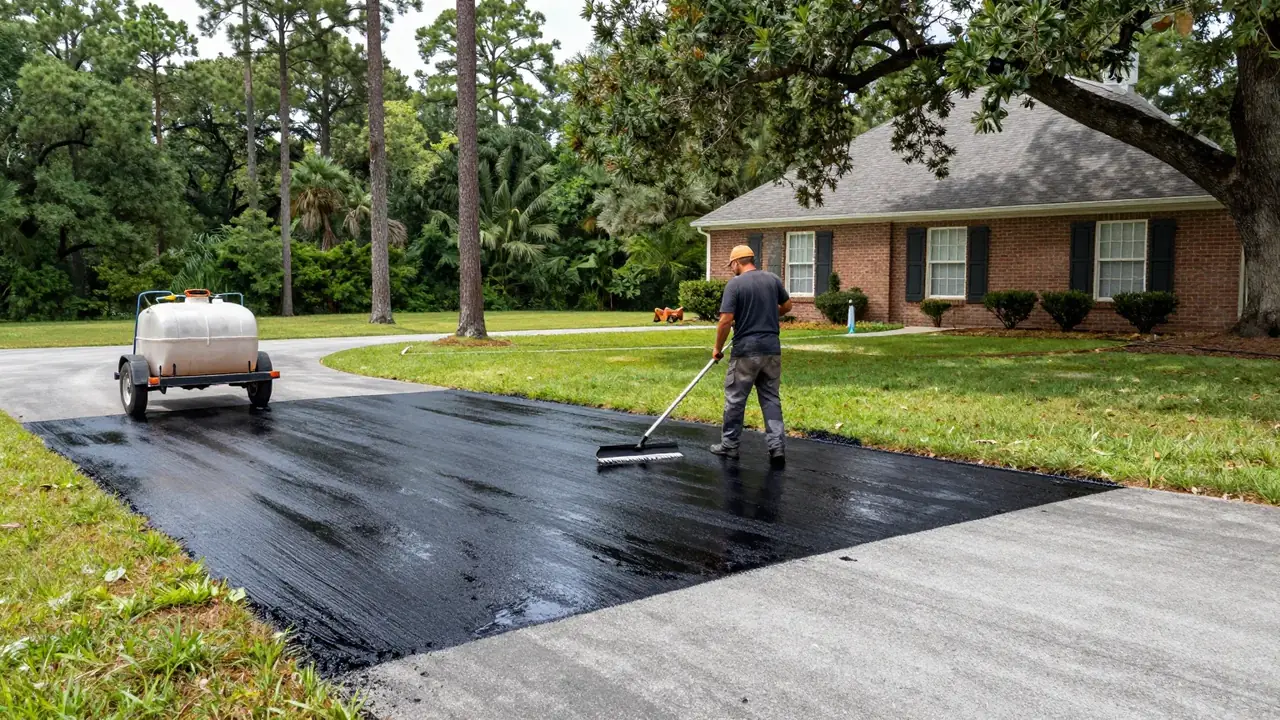
What seal coating does, and what it does not
Sun and rain slowly dry out the binder that holds asphalt together. The surface fades from black to gray, the small stones start to show, and fine cracks open up. A coat of sealer puts a new protective skin over the top, slows that drying, keeps rain from soaking in, and brings the color back. On a driveway or lot that is still structurally sound, sealcoating every few years is the cheapest thing you can do to stretch its life.
It is not a repair. Sealer will not level a sunken spot, fill a pothole or hold together pavement that is cracking in a web pattern. If we see those on the walk-through, we will price the repairs first and the sealcoat second, or tell you plainly that the surface needs resurfacing instead.
Driveway sealcoating, step by step
- Clean. Edges are trimmed back, the surface is blown and brushed, and dirt and growth are cleared out of the cracks.
- Fill cracks. Cracks are filled with hot rubberized sealant so the sealer has a solid surface to bridge.
- Prime oil spots. Oil and fuel stains get a primer, otherwise the sealer will not stick there.
- Two coats. Sealer is applied by squeegee or spray in two thin coats, the second after the first has dried.
- Block it off. The driveway is closed off with tape or cones until it is dry enough to walk on, then to drive on.
Call (225) 338-4482 Request a callback
Parking lot sealcoating without closing the business
For commercial lots we split the job into sections so customers and tenants can still park on part of the lot while the rest dries. Drive lanes and entrances wear faster than parking stalls, so they often need crack filling and patching before they are sealed. Sealing covers the old lines, so asphalt sealcoating on a lot is almost always followed by restriping once the sealer has cured. We plan both together so the lot is only out of use once.
Timing a sealcoat around Baton Rouge weather
Sealer needs a dry surface, warm air and several dry hours after it goes down. In summer that usually means starting early and watching the afternoon storm forecast closely; in the cooler months it means waiting for a warm, dry stretch. Humid days slow the drying, so we leave more time before the surface is opened. Brand-new asphalt should not be sealed straight away either; it needs several months for the oils in the fresh mix to settle before its first coat.