
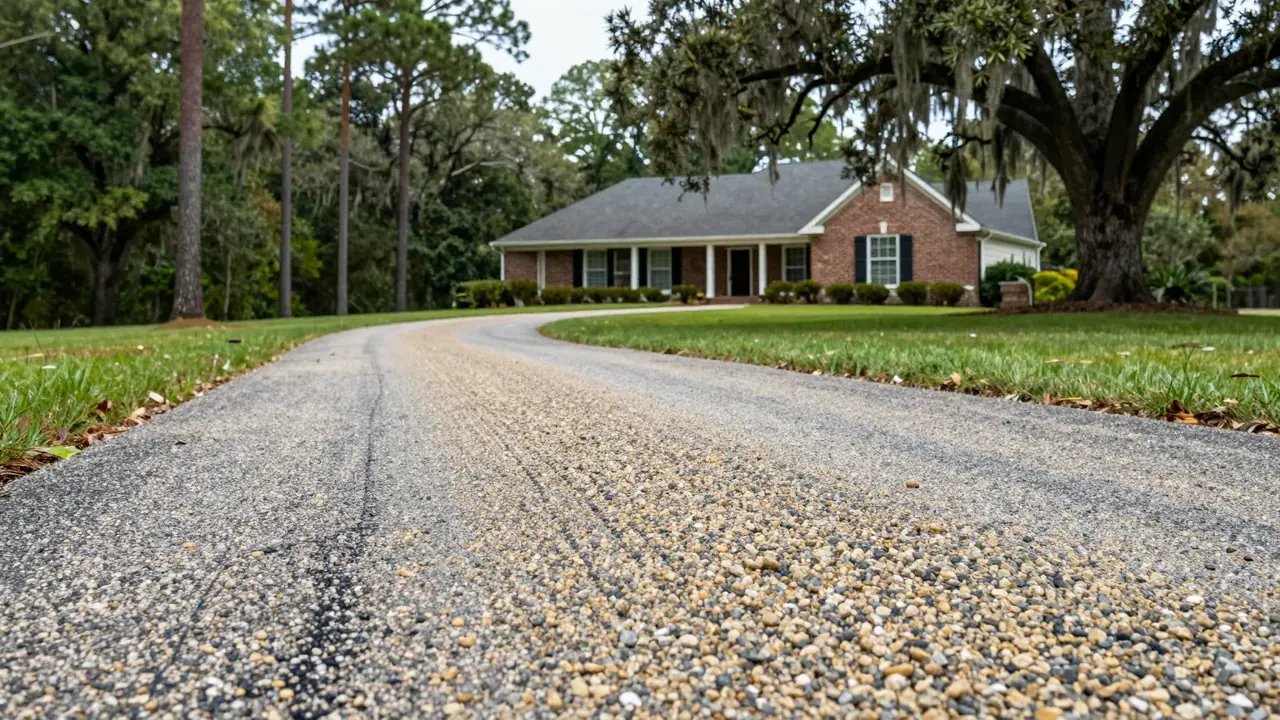
How chip seal is laid
A tar and chip surface starts with the same thing as any driveway: a graded, compacted stone base that drains. Hot liquid asphalt is sprayed over the base, and right behind it a layer of clean crushed stone is spread across the wet binder. A roller presses the stone in, the binder grips it as it cools, and the loose stones that did not stick are swept off over the following days. Many drives get two layers, the second with smaller stone, for a tighter and longer-lasting surface.
Where tar and chip works around Baton Rouge
Chip seal is at its best on long country drives, the kind common out toward Zachary and Central, where paving the full length would be costly and a gravel drive keeps washing out. It gives a firm, textured surface with good grip in the rain and a natural stone color that suits rural and farmhouse-style homes. It is less suited to short driveways where cars park and turn constantly, or to areas where children ride bikes and skates.
Call (225) 338-4482 Request a callback
How it holds up in heat and heavy rain
On a hot July afternoon the binder in a fresh chip seal can soften, and sharp turns of the steering wheel will scuff stones loose. Once it has been through a summer, it settles. Heavy rain is not a problem for the surface itself, but water still has to run off, because a chip seal over a soft, wet base will break up just like asphalt would. Most chip seal drives need a fresh layer every several years to keep the surface tight.
Tar and chip versus an asphalt driveway
Chip seal usually costs less per square foot than hot-mix asphalt and has a rougher, more rustic look. Asphalt is smoother, easier to sweep, easier to shovel debris from and can be sealcoated; chip seal cannot be sealcoated in the usual way and is renewed with another chip layer instead. For a short suburban driveway we usually recommend asphalt driveway paving; for a long rural run, chip seal or asphalt millings are worth pricing. See the cost guide and the concrete vs asphalt guide for the other options.